
Current Graduate Students
Entrance: 2026
Ellie Antenucci
eanten92@lakers.mercyhurst.edu
B.A in Anthropology with a Forensic Anthropology concentration, minor in Sociology
The University of Tennessee; Knoxville, Tennessee

My interest in forensic anthropology started early in my high school career when I took a general anthropology course and immediately connected with the biological/forensic concentration. My teacher encouraged me to further explore the forensic field and suggested I look into the University of Tennessee, Knoxville, (UTK) particularly because of its Anthropology Research Facility (ARF). At UTK, I gained valuable hands-on experience through courses at ARF, where I participated in exercises that replicated real-life forensic scenes, as well as through work with osteological collections. During my undergraduate studies, I was also fortunate to complete a forensic internship with the Chester County Coroner’s Office in Pennsylvania. In this role, I attended a variety of scenes and assisted medicolegal death investigators with photography, scene mapping, autopsies, and case coordination with other legal agencies. Through my classes at UTK and a short course on fire fatalities that I attended during my internship, I developed a specific research interest in the identification of burned and commingled human remains and the application of forensic odontology to these cases. I am very excited to focus on this research through Mercyhurst's case-forward program. My long-term goal is to become a board-certified forensic anthropologist and work with an organization such as the Defense POW/MIA Accounting Agency (DPAA) to help identify and bring home those missing in action and provide closure to their families.
Caleb Conatser
cconat48@lakers.mercyhurst.edu
B.A in Anthropology with a Forensic Anthropology concentration, minor in Biology
The University of Tennessee; Knoxville, Tennessee

I initially went to college for animal science with the goal of working in veterinary pathology, but I discovered that forensic science was much more exciting to me. After I became a part of the University of Tennessee’s (UT) Anthropology program and worked with the amazing faculty and students there, I never looked back. The entire field of anthropology is extremely fascinating to me, but my main passion is the forensic aspect. Getting to volunteer and take a class at the Forensic Anthropology Center at UT, also known as the Body Farm, was an amazing experience that taught and helped me fuel my research interests. When I first learned about Mercyhurst and its Anthropology program, I knew this would be the perfect place for me.
My research interests are quantitative methods of identification, trauma analysis, and postmortem interval. My current professional goal is to pursue a Ph.D. with the intent of becoming a university professor, while also conducting research and casework.
Cynthia Maz
B.A. in Anthropology with a Biological Anthropology concentration, B.S. in Information Science
The University of Pittsburgh; Pittsburgh, Pennsylvania

My path to forensic anthropology began as a fascination for prehistory and ancient civilizations. At eight years old, my mom gifted me a history textbook largely guided by archaeological and anthropological studies, and from that point on, there was no stopping me. As I explored my interests throughout high school, it became clear that I wanted to be involved in the medical field and make a direct impact on individuals and communities. After a brief stint in nursing, I found my home in biological anthropology at the University of Pittsburgh, where I learned the importance of dignity in death and community-led repatriation and healing. I had the opportunity to apply these philosophies while working in the anthropology collections at the Carnegie Museum of Natural History, assisting on a wide variety of projects from connecting high schoolers to careers in museums and collections management to working directly with Indigenous communities for cultural preservation and repatriation. The Forensics program at Mercyhurst will allow me to expand my understanding of forensic and biological anthropology, as I transition into research and after-death care projects. Through the intersection of databases, medical archives, and biological anthropology, my education has prepared me for a Ph.D. and future career in historical bioarchaeology with a focus on identification. After my master’s, I hope to serve medically-exploited communities; expand human dignity programs in universities, museums, and medical institutions; and help identify as many individuals as possible, so they may be laid to rest with their name and life remembered.
Paulina M. Meléndez Olivera
pmelen51@lakers.mercyhurst.edu
M.S. in Bioarchaeological & Forensic Anthropology
University College London; London, England

Paulina is trained in biological anthropology, forensic anthropology, and bioarchaeology, with experience in the management, cataloguing, identification, and analysis of osteological remains from bioanthropological and bioarchaeological contexts in Puerto Rico, Ireland, and England. Her research focuses on human skeletal anatomy and trauma biomechanics, with an interest in what individual skeletal elements, structural variation, and patterns of skeletal alteration can reveal about biological and forensic questions. Form is approached as a structural system in which anatomical organization influences mechanical response, fracture patterning, and the interpretation of skeletal evidence across forensic and archaeological contexts. Research integrates human and comparative anatomy with imaging, laboratory, and field-based approaches to investigate skeletal structure, trauma, and the evidentiary potential of incomplete or altered remains. Her experience includes osteological collections, post-excavation inventory and management, and the organization and analysis of physical and digital osteological databases. She emphasizes methodological clarity and research development, with a particular interest in mentorship that supports early-career researchers in developing skills and publishable work throughout academic training. After completing the master's program, she will pursue doctoral studies (Ph.D.) and American Board of Forensic Anthropology (ABFA) certification as an analyst and, ultimately, a diplomate.
Sophia Traczek
stracz84@lakers.mercyhurst.edu
B.A. in Anthropology with a Biological Anthropology concentration, B.S. in Psychology
The University of Pittsburgh; Pittsburgh, Pennsylvania

My interest in forensic anthropology started with my mom, who would entertain all of us at dinner with her stories of being a histologist. She helped me foster my love of science and learning, which led me to pursue dual degrees in Anthropology and Psychology at the University of Pittsburgh (Pitt). As an undergraduate, I focused on biological anthropology and gained practical experience through excavating in Romania, acting as a teaching assistant for coursework, including Introduction to Biological Anthropology and Human Skeletal Analysis, and completing my own research project in Pitt’s own Biological Anthropology lab, focusing on the impact of diet and institutionalization on dental development. During my senior year, I completed an internship with the Allegheny County Office of the Medical Examiner, which cemented my path into the world of forensics.
After I graduate from Mercyhurst, I plan to pursue a Ph.D. in anatomy, with the goal of teaching in a university or medical school, while still consulting with casework as a forensic anthropologist.
Entrance: 2025
Rylee Arena
rarena21@lakers.mercyhurst.edu
B.S. in Applied Forensic Science with a Forensic Anthropology concentration, minor in Physics
Mercyhurst University, Pennsylvania
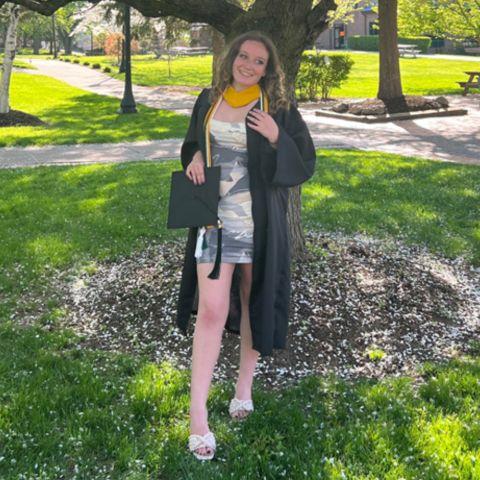
I earned my undergraduate degree in Applied Forensic Sciences at Mercyhurst University in 2022. I’ve always had a love and fascination for science and art, but when initially applying to college, I did not know exactly what I wanted to major in. I rolled the dice (quite literally) and ended up choosing forensics. After deciding to attend Mercyhurst, I was introduced to the specific field of forensic anthropology, which cohesively combined my interests. Additionally, I minored in Physics and discovered an innate interest in how machines work, which I love to apply to the human body and the world around it. Throughout my senior year, I gained experience assisting graduate students with their theses and attending a case with the M-FSRT, where my passion truly began to flourish. After graduating, I worked in two clinical laboratories, but realized quickly the extent to which I missed the field and desired to return to it. I gained extensive experience and skills working in the lab but knew I wanted to be hands-on at the scene as well. Upon graduating with my master’s, I plan to work as a medicolegal death investigator and eventually further pursue my education, either in a Ph.D. program or by earning my M.D., to practice forensic pathology and tie my current work experience to my education. My research interests include trauma analysis, human decomposition, and forensic taphonomy. I hope that by obtaining my master’s degree, I will be able to provide a voice to those previously silenced and bring closure to families with unanswered questions regarding their loved ones, as I believe no question should be left unanswered.
Juliana Bazdyrev
jbazdy42@lakers.mercyhurst.edu
B.A. in Anthropology with a Forensic Anthropology concentration
University of Montana, Montana
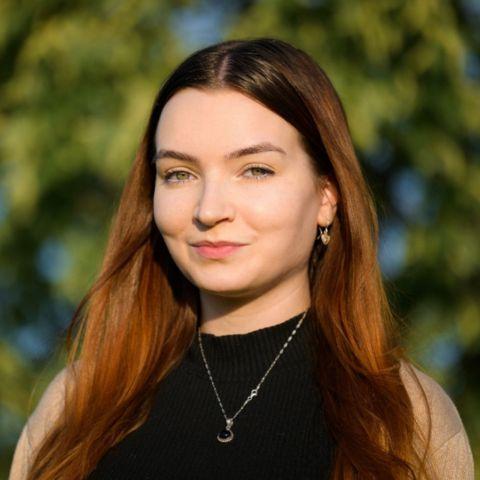
My path into forensic anthropology began unexpectedly during my time at Tacoma Community College. With no clear academic direction, an introductory course sparked an immediate fascination that led me to pursue the field. After completing two years of coursework, I transferred to the University of Montana, where I earned my Bachelor of Arts in Anthropology, graduating summa cum laude. While there, my involvement with the Criminology Club provided the opportunity to shadow an autopsy at a local crime lab. To expand my practical skills after graduation, I attended a bioarcheological field school in Croatia, where I gained hands-on experience in excavating and documenting historical gravesites alongside international experts. I was drawn to Mercyhurst University's program for its active casework and hands-on learning approach. Here, I aim to develop specialized expertise while strengthening my holistic understanding of forensic anthropology. My research interests center on developing and applying techniques used for posthumous identification, particularly in cases with limited antemortem data and disputed identification. I am especially interested in integrating methods such as forensic genetic genealogy to build a scientifically sound identity. My future career goals include working with a state agency or pursuing private contract work, with the potential to later pursue a Ph.D.
Ashley Fields
afield10@lakers.mercyhurst.edu
B.S. in Anthropology, minor in Biology
Texas State University, Texas
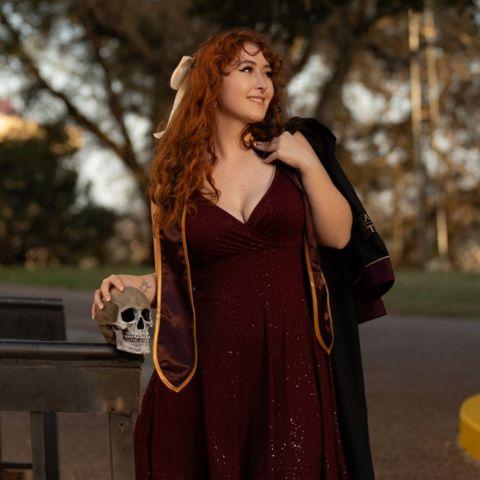
My name is Ashley Fields, and I just recently graduated with my Bachelor's of Science in Anthropology with a Biology minor from Texas State University! I have always been very interested in forensics, especially when it involves helping others. This is what led me to intern with various organizations throughout my undergrad, such as the Forensic Anthropology Center at Texas State, the Forensic Anthropology Research Facility, and especially Operation Identification. Being a part of an active forensic humanitarian organization really fueled my love for fieldwork and humanitarian aid. Through OpID, I was able to assist with multiple methods for human identification, repatriation, evidence collection, and burials along the Texas border. I also participated in studies within Texas State's vast skeletal collection and worked in their outdoor decomposition facility, which gave me a very unique undergraduate experience. Furthermore, I volunteered at the Osteological Research and Processing Laboratory for many years, processing the skeletons from the Texas State Body donation program. I am so thankful for all of the amazing experiences I had in my undergrad, and even more excited for the chance to expand my learning at Mercyhurst! I am interested in researching new methods of identification through the use of dental x-rays. I am deeply passionate about furthering aid to the Texas border, and my dream is to take everything I learn at Mercyhurst and come back to establish a Human Identification Center to aid in the mass crisis that is unfolding around my home.
Ella Griffith
egriff71@lakers.mercyhurst.edu
B.S. in Anthropology, minor in Criminology, and embedded certificate in Forensic Science
University of West Georgia, Georgia
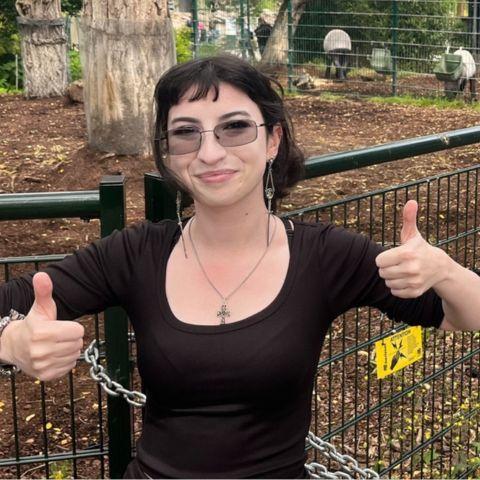
I was initially an artist studying Criminology at the University of West Georgia before I even knew what Forensic Anthropology was. After a chance conversation with the wonderful Dr. Corey Maggiano about my interest in cannibalism's traces throughout the archaeological record, I learned about the field and haven't looked back ever since. After switching my major, I quickly took all the high-level courses involving forensic and biological anthropology offered at my school and was honored to work as a student research assistant in the Biological and Forensic Anthropology Lab at UWG for three semesters. In my position, I was able to engage in student outreach and learn how to manage a skeletal lab while also engaging in my own research interests, involving both trauma associated with anthropophagy and postmortem dismemberment in modern prehistorical contexts, as well as the integration of art education in osteology. After a gnarly field experience and a final honors thesis, I knew that I wanted to continue the path to graduate school, and I am thrilled to be accepted to Mercyhurst for the Fall 2025 cohort.
My interests include forensic trauma analysis (specifically involving dismemberment trauma), forensic analysis in bioarchaeology, and osteological pathology. I have always said I did not want to make career choices until I saw where the path took me, but I would love to become a board-certified forensic anthropologist and engage in medicolegal death investigations in the United States or engage in forensic/bioarch research abroad. Anyway the wind blows, I’ll still be drawing bones.
McCarthy Lang
B.S. in Applied Forensic Science with a Forensic Anthropology concentration
Mercyhurst University, Pennsylvania
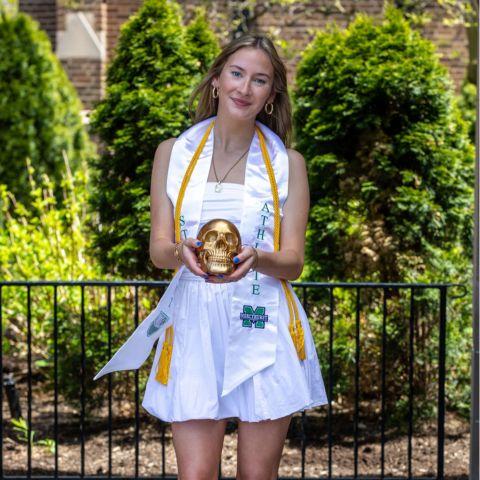
I developed an interest in death investigation during high school, initially considering careers in pathology or as a coroner. While attending my local community college, I enrolled in a forensic anthropology course that sparked my interest in the field and motivated me to transfer to Mercyhurst University to advance my education. At Mercyhurst, I earned a Bachelor of Science in Applied Forensic Science, with a concentration in Forensic Anthropology. During my studies, I was introduced to specialized areas within forensic anthropology, particularly forensic taphonomy and forensic archaeology, which emphasized the crucial role of forensic archaeological recoveries in the discipline. I also had the opportunity to process remains in the North East lab and gain extensive hands-on experience with the university’s osteological donor collection. My current research interests include forensic taphonomy, forensic archaeology, post-mortem interval, and trauma analysis. Upon completing my master’s program, I intend to pursue a Ph.D. in forensic anthropology to establish a career in medicolegal death investigation or as a forensic anthropologist.
Sydney Silas
ssilas53@lakers.mercyhurst.edu
B.S. in Anthropology with a Forensic Anthropology concentration, minors in Forensic Science and History
Baylor University, Texas
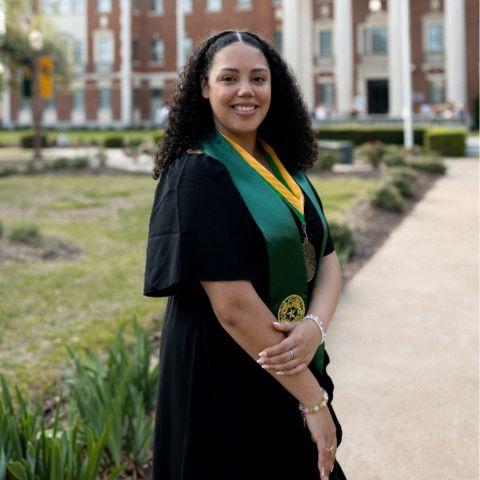
Originally from Houston, Texas, I attended Baylor University, where I earned my B.S. in Anthropology with a concentration in Forensic Anthropology and minors in both Forensic Science and History. My interest in criminal justice started in my younger years. As I went through high school, this interest expanded into forensic and biological anthropology with a particular curiosity towards ancestry. During my time as an undergraduate, I was afforded many opportunities to work in both academic and professional settings. For example, I worked as a teaching assistant for the Osteology Lab at Baylor University, and I was a part of the McNair Scholars program. My research subject within McNair involved analyzing the craniometrics of Hispanics as an admixed population, with a goal of finding a metric threshold of identification that can increase the accuracy of ancestry estimation. While I want to continue this route of research, I also want to include a historical and population genetic component to further explain and evaluate why individuals with Hispanic ancestry, depending on the region, are more or less likely to be misclassified. This work has a special place in my heart as I myself am an admixed individual with both African American and Mexican American ancestry. In the future, I hope to pursue a Ph.D. in Biological Anthropology with a career in academia, focusing on research and teaching.
Maureena Terven
mterve45@lakers.mercyhurst.edu
B.S. in Anthropology, minor in Sociology
Illinois State University, Illinois
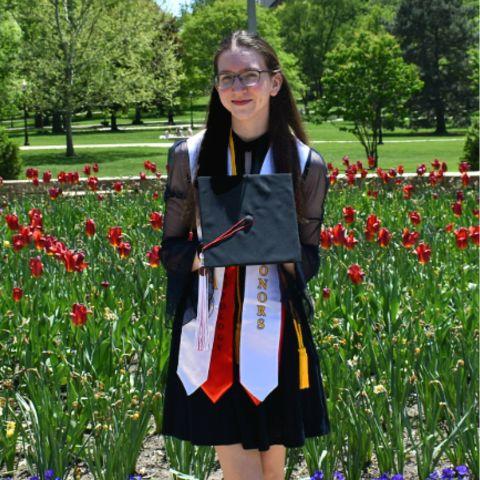
My name is Maureena Terven. I received my B.S. in Anthropology with a minor in Sociology from Illinois State University. Early on in my undergraduate career, I took an anthropology course that truly changed the trajectory of my undergraduate degree. I immediately fell in love with all aspects of forensic anthropology, the almost puzzle-like nature and focus on problem solving was riveting! Getting to experience fieldwork was a game-changer, as I did a field school towards the latter half of my undergraduate degree that solidified my curiosity in practical application of bioarchaeology and forensics methods. My interest in research mainly revolves around bioarchaeology, forensic taphonomy, paleopathology, and osteology. Ultimately, I want to be out in the field, either working on a forensic recovery team or becoming a certified forensic anthropologist.
Calista Zervakos
czerva49@lakers.mercyhurst.edu
B.A. in Biological Anthropology
University of California; Santa Barbara, California
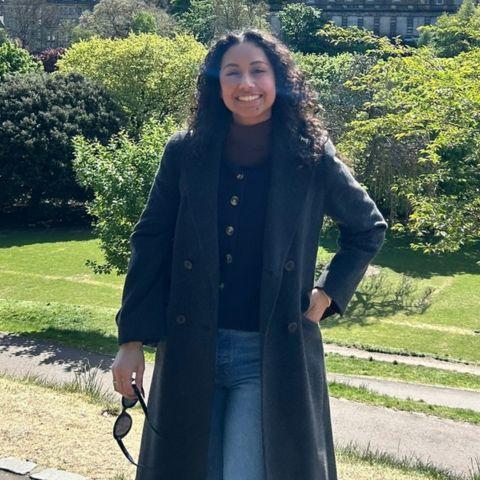
I earned my Bachelor of Arts in Biological Anthropology at the University of California, Santa Barbara. While there, I had the opportunity to intern at our zooarchaeology lab and the stable isotope lab, both experiences that deepened my interest in assessing skeletal trauma and pursuing bioarchaeological and forensic research. After graduating, I was lucky enough to participate in a salvage bioarchaeology project in Romania, where I gained hands-on experience in mortuary archaeology and learned more about building biological profiles using the remains disinterred at my excavation site.
Although I enjoy studying historical populations, my experience shadowing deputy coroners and viewing autopsies at the Orange County Coroner’s Division really shaped my interest in forensic anthropology. I’m excited to learn more about this field at Mercyhurst, but I am especially interested in researching skeletal trauma, paleopathology, and potential indicators of systemic disparities across both historical and modern skeletal populations. After I graduate, I would love to pursue a Ph.D. in Forensic Anthropology and continue working on forensic casework as a medicolegal death investigator.